


★ Standing with those who protect and serve ★ Donate Now →
Documented Incidents

Stories: When Rhetoric Turns to Risk

Real incidents showing how violent rhetoric manifests in real-world danger. These stories are anonymized summaries based on public reporting and court records.

Content Note: These stories contain references to threats and intimidation. We do not reproduce graphic language in full. Names, locations, and identifying details are changed. Any legal allegations are allegations unless proven in court.

"The moment a person moves from 'I oppose you' to 'I'm going to kill you,' public debate collapses into intimidation."

The following accounts demonstrate the dangerous progression from hostile words to hostile actions. Each story represents real documented incidents where officers and their families faced genuine threats to their safety.

Social media threat post concept illustration
01
⚠ Public Online Threat

"I'm Opening Fire"

First name: Nate (community member)
Target: ICE agents in a neighborhood
Type: Public online threat

What Happened

In 2025, "Nate" posted on social media that if ICE agents came into his neighborhood, he would open fire, and he urged others to treat it like a call to action rather than a hypothetical.

Impact
  • → Threats like this are treated as credible public safety risks
  • → They trigger law-enforcement response, investigation, and charges
  • → They amplify fear for officers who may live in the same communities

Why It Matters: The moment rhetoric shifts from opposition to death threats, civil discourse is replaced by intimidation and fear.

Concept of bounty solicitation online
02
⚠ "Bounty"-Style Solicitation

"A Bounty for Agents"

First name: Leo (online poster)
Target: ICE agents
Type: "Bounty"-style solicitation

What Happened

In late 2025, "Leo" posted a message online that sought a group of people willing to do violence and referenced a cash payment per ICE agent.

Impact
  • → "Bounty" rhetoric recruits unstable people and incentivizes harm
  • → Forces real security planning—not just for officers, but families
  • → Creates a marketplace for violence against public servants

Why It Matters: Calling for violence and putting a price tag on a human life is not activism. It is escalation toward murder.

Doxxing and swatting concept illustration
03
⚠ Doxxing / "Swatting" Encouragement

Doxxing + "Swatting" Instructions

First name: Maya (ICE employee)
Target: An ICE attorney and her family
Type: Doxxing / "swatting" encouragement

What Happened

In 2025, "Maya" learned her home address was posted online alongside instructions encouraging strangers to "swat" her — a tactic meant to provoke an armed police response at someone's home.

Impact
  • → Doxxing turns a job into a 24/7 safety concern
  • → It spills over onto relatives who never chose public service
  • → "Swatting" can result in innocent people being injured or killed

Why It Matters: Doxxing is an attack on the boundary between public work and private life—and "swatting" rhetoric has proven deadly.

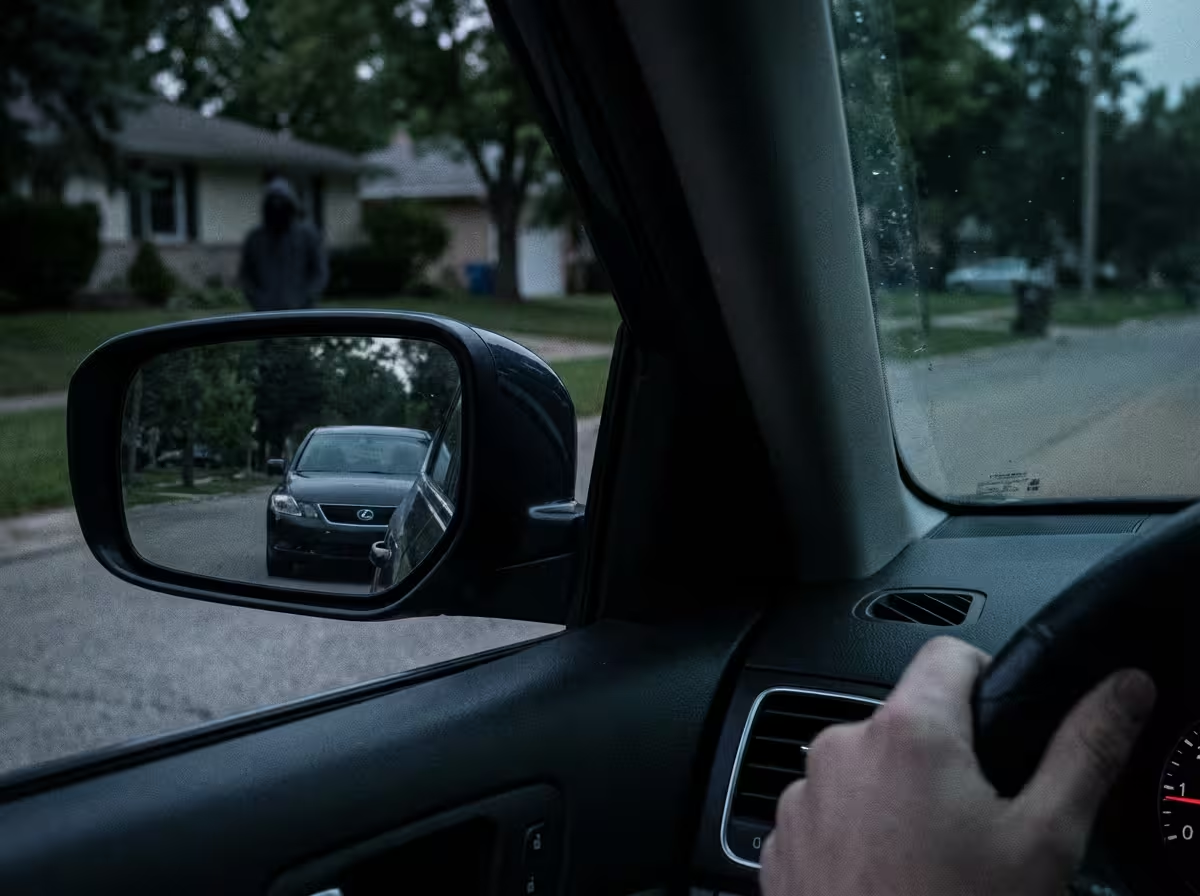
Person being followed home concept
04
⚠ Doxxing / Intimidation Campaign

Followed Home and Livestreamed

First names: Ava, Bri, and Cara (activists)
Target: An ICE agent and his neighborhood
Type: Doxxing / intimidation campaign

What Happened

In 2025, three activists allegedly followed an ICE agent from a federal building to his home, livestreamed the pursuit, and posted identifying information. They reportedly shouted messaging to alert neighbors that an ICE agent lived nearby.

Impact
  • → The target isn't just "the agent"—it's the agent's family and community
  • → It signals: "We can find you at home." That's intimidation—not debate
  • → Creates ongoing fear for spouses and children

Why It Matters: Even when the goal is "accountability," home targeting can become a gateway to violence.

Threatening flyers posted in neighborhood
05
⚠ Flyers / Public Threats / Intimidation

Flyers in Neighborhoods

First name: Rachel (spouse of an officer)
Target: Officers and families
Type: Flyers / public threats / intimidation

What Happened

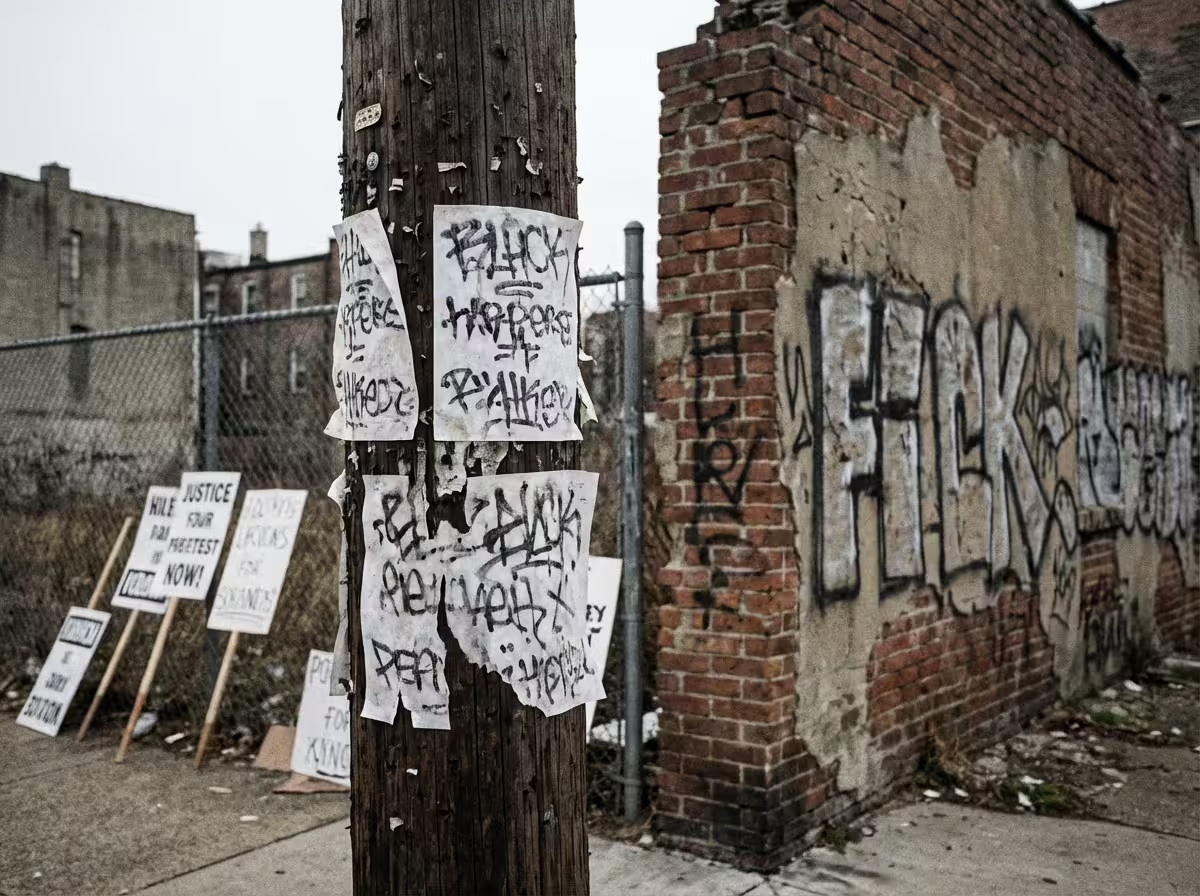
In mid-2025, neighborhoods in one U.S. city reported flyers with photos of officers and hostile slogans implying there would be no peace for ICE. Officials also cited threatening graffiti near a federal facility.

Impact
  • → Families become "collateral targets"
  • → Kids and spouses inherit risk they never signed up for
  • → Communities experience escalating tension and fear

Why It Matters: When intimidation becomes a community tactic, it's no longer "protest." It's coercion.

Law enforcement facility attack aftermath
06
⚠ Escalation from Rhetoric to Violence

Anti-ICE Graffiti, Then Gunfire

First names: Owen and Sam (local officers)
Target: A detention facility and responding police
Type: Escalation from violent rhetoric into violence

What Happened

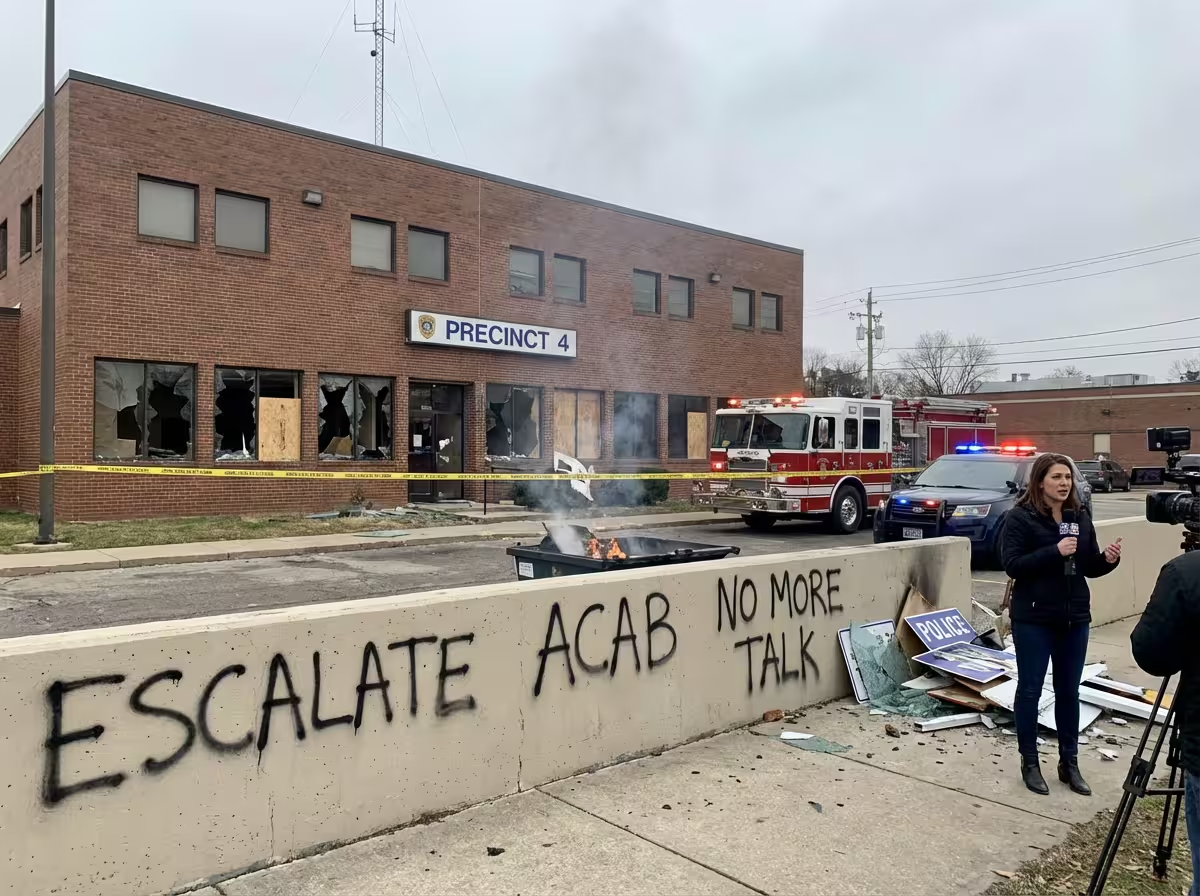
In 2025, a group allegedly showed up at a detention facility with coordinated actions—including fireworks as a diversion and anti-ICE graffiti—and a responding local officer was shot.

Impact
  • → Rhetoric that normalizes violence creates permission structures for violence
  • → Local police—not just federal officers—end up on the receiving end
  • → Words that celebrate harm become the blueprint for harm

Why It Matters: This is the clearest warning sign—words that celebrate harm can become the blueprint for harm.

The Human Cost: Personal Accounts

Behind the statistics are real families living in fear. These composite accounts illustrate the personal toll of violent rhetoric on officers and their loved ones.

"The Nazi Lives Here"

Based on reports of doxxing, residential protests, and specific telephonic threats

"Sarah" is the wife of a ten-year veteran of ICE's Enforcement and Removal Operations. For a decade, she viewed her husband's job as vital public service—removing gang members and violent offenders from the streets.

It began with a social media post labeling her husband a "Neighborhood Nazi." Two nights later, a group gathered outside their home with bullhorns screaming "Gestapo!" at the darkened windows while their daughters tried to sleep.

The phone calls began. Sarah answered to hear someone calmly detail the route her daughter took to elementary school, making veiled threats about what happens to "Nazi families."

They sold the house at a loss and moved two counties away. For Sarah, the "words" of the activists were not political speech—they were weapons that destroyed her family's sense of safety.

The Schoolyard Indictment

Based on reports of bullying and trickle-down effects of anti-ICE rhetoric in schools

"Michael" is a teenager, the son of a Border Patrol agent. He was proud of his father, who once received a commendation for rescuing a drowning family from a freezing river.

Following intense national coverage labeling agents "stormtroopers" and "racist thugs," his school's atmosphere shifted. A civics teacher led a class discussion on the "immorality" of border enforcement.

Michael was cornered in the cafeteria. "Your dad puts kids in cages," they sneered. The bullying escalated from verbal taunts to complete social isolation.

Michael asked his father to park a block away so no one would see the vehicle. The shame inflicted on the son was a direct result of the lies told about the father—a man who saved lives.

The Coffee Cup and the Scar

Based on specific assault reports detailed in DHS releases

Officer "David" worked in a detention facility, priding himself on treating every detainee with dignity. He was processing a detainee with a violent criminal history.

The detainee had been watching news pundits and politicians say that ICE agents were "monsters" and that "resistance is justified." The rhetoric provided him with a moral shield for his violent impulses.

As David turned to hand the man a hygiene kit, the detainee grabbed a heavy metal coffee cup and swung it with full force into David's face, splitting his lip and shattering a tooth.

The physical pain was secondary to the realization that the assailant felt justified in the attack. When leaders dehumanize officers, they hand weapons to violent men. The scar on David's lip is a permanent reminder.

The Comment Thread That Followed Him Home

Composite vignette illustrating documented patterns

An ICE officer participated in a planned enforcement operation that became publicly visible after a bystander posted clips online. Within hours, his name and photo began circulating with captions about "making them pay."

Over the next few days, his spouse received a surge of messages from unknown accounts—some crude insults, others references to family routines: "we know where you'll be."

They changed daily habits immediately: school pickup routes, social media settings, how they answered the door.

The officer described becoming hypervigilant—scanning parking lots, checking mirrors, feeling on-edge in normal public places. There's a difference between criticizing policies and language that frames violence as acceptable.

If You Want Fewer Stories Like These, Be Part of the Answer

Every story represents a real person whose life was impacted by violent rhetoric. You can help change the narrative.